 AOWEIDA
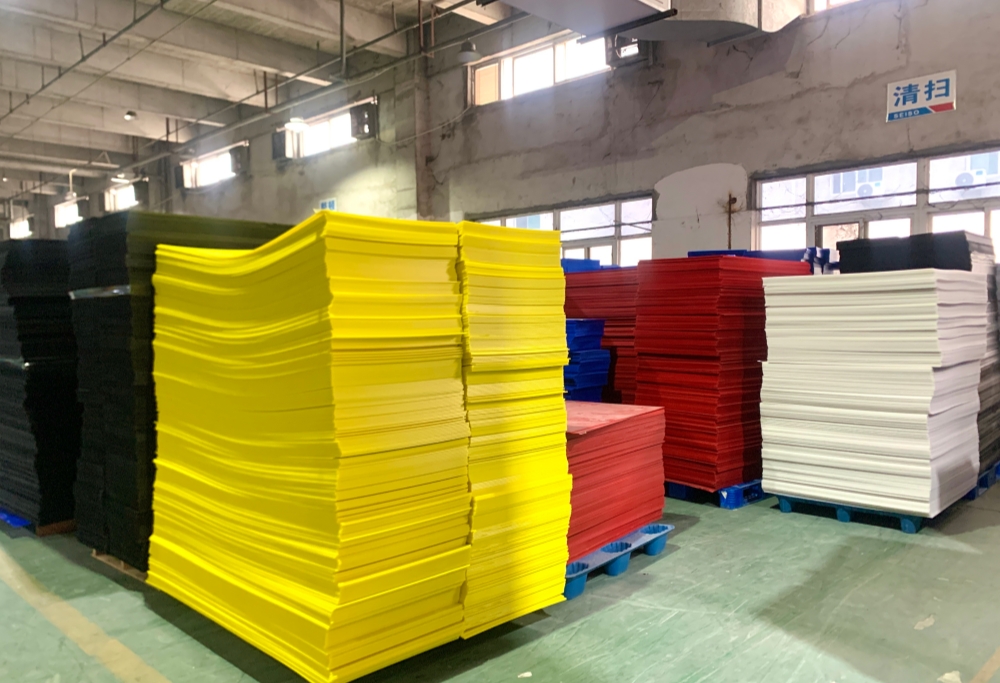
What Is EVA Foam?
EVA foam — short for ethylene-vinyl acetate — is a closed-cell foam made by copolymerising ethylene with vinyl acetate and expanding the blend with a blowing agent. The result is a lightweight, flexible, resilient material that has become the default choice for shoe midsoles, yoga mats, protective packaging, automotive trim and thousands of other products.
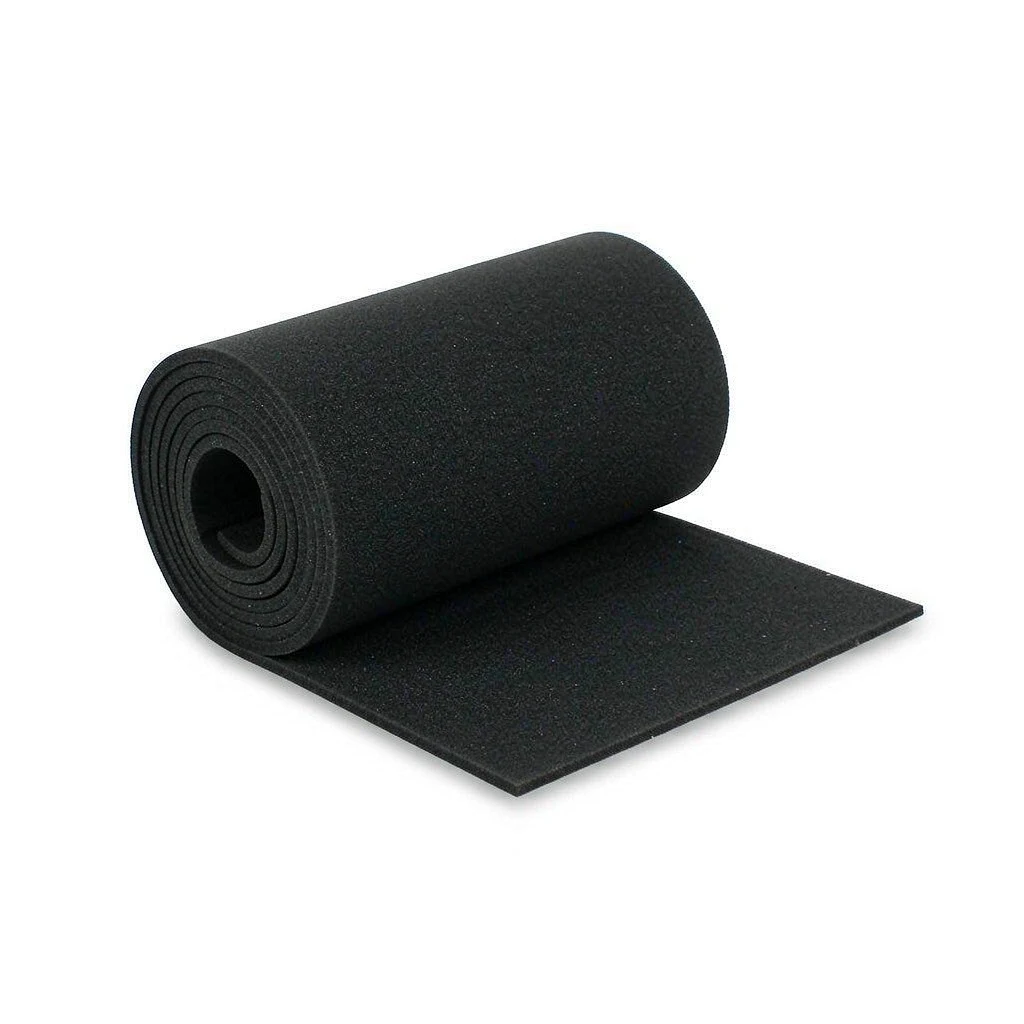
If you are new to the material and want the short version: what is EVA foam used for? Anything that needs cushioning without weight, water resistance without rubber’s cost, and a surface that can be cut, glued, printed or heat-pressed. Our Black EVA Foam Roll 13.5″ x 49″ and Black EVA Foam Sheets A4 2mm (10 Pack) are the two products most buyers start with.
How EVA foam is made
The standard route is foaming and compression moulding. Resin pellets are mixed with a blowing agent, cross-linking agent and colorants, then heated under pressure until the blowing agent decomposes and releases gas. The gas expands the melt into a closed-cell structure, which is then cooled, cured and sliced to thickness.
From there the foam can be:
- Slit into rolls — for flooring, matting and continuous lamination.
- Cut into sheets — the standard format for packaging and crafts.
- CNC-routed or die-cut — for precision inserts and shaped components.
- Compression-moulded — for shoe midsoles and 3D parts.
VA content is the main formulation lever. Higher vinyl acetate makes the foam softer, clearer and more elastic; lower VA makes it tougher and more rigid. Most commercial EVA foam sits between 5% and 40% VA.
EVA foam properties: the numbers buyers actually ask for
Marketing copy says “lightweight and durable”. Buyers need figures they can put on a spec sheet. These are the four numbers that decide how a grade behaves:
| Property | Typical range | What it affects | AOWEIDA standard |
|---|---|---|---|
| Density | 30–200 kg/m³ | Weight, firmness, cost per part | 86 kg/m³ |
| Hardness (Shore C) | 15C – 80C | Feel, compression resistance | 45–60C (midsole grade) |
| Thickness | 1–100 mm | Cushioning depth, part fit | 1–20 mm (rolls & sheets) |
| Temperature range | −40 °C to +60 °C | Shipping and end-use climate | Standard grade |
Density is the single most important number. As a working guide: 30–45 kg/m³ is ultra-light and suits yoga mats and padding; 60–100 kg/m³ covers general footwear and packaging; 120–200 kg/m³ is structural and used for high-load inserts.
Hardness is measured on the Shore C scale, not Shore A. A yoga mat typically runs 35–45C, a shoe midsole 45–60C, and a toolbox insert 60–75C. Getting this wrong is the most common reason a first sample gets rejected.
Need help pinning yours down? Our guide on how to specify EVA foam density, hardness and thickness walks through it step by step.
Other properties worth knowing
- Closed-cell structure — cells are sealed, so the foam does not wick water. It is water-resistant, though not a substitute for a sealed waterproof membrane.
- Chemical and UV resistance — stands up to oils, solvents and sunlight far better than many plastics.
- Non-toxic and low-odour when formulated to REACH and RoHS, making it suitable for toys, footwear and skin-contact goods. See our notes on REACH, RoHS and SGS certification.
- Easy to fabricate — cuts cleanly, takes water-based and solvent adhesives, heat-presses, laminates and embosses.
- Buoyant — the sealed cells make it a natural fit for flotation aids and water sports gear.
EVA vs PE vs PVC vs rubber
Buyers rarely choose EVA in isolation — they are usually replacing something else. Here is the practical comparison:
| Material | Strength | Limitation | Best for |
|---|---|---|---|
| EVA foam | Soft, springy, closed-cell, easy to colour | Softens above ~60 °C | Footwear, sports, packaging, consumer goods |
| PE foam | Cheapest, good structural rigidity | Less soft, tears more easily | Budget packaging, expansion joints |
| PVC foam | Lowest cost, rigid | Contains plasticisers, hard to clear strict EU limits | Avoid if selling into the EU |
| Rubber | Most elastic, best abrasion resistance | Heaviest and most expensive to mould | High-abrasion industrial parts |
Our rule of thumb: choose EVA for footwear, sports, packaging and most consumer goods; choose rubber for high-abrasion industrial parts; avoid PVC if you sell into Europe or to eco-conscious brands. For the full breakdown, see EVA vs PVC vs Rubber: Choosing the Right Material.
Where EVA foam is used
Footwear
EVA is the core material of the modern shoe midsole. Compared with traditional rubber soles it is far lighter and bouncier, reducing foot fatigue over a long shift or run.
Sports and fitness
Yoga mats, gym flooring, foam blocks, knee and elbow pads, and swimming aids. The closed surface resists sweat and wipes clean.
Protective packaging
Die-cut EVA inserts cushion electronics, instruments, cosmetics and glass during transit. The foam holds a precision cavity that PE and EPS cannot match. More on this in our piece about EVA packaging inserts for precision goods.
Automotive
Interior trim, anti-rattle pads, NVH damping layers, gaskets and door-trim spacers — anywhere weight saving and quietness both matter.
Crafts, cosplay and education
Thin EVA sheet is the standard material for cosplay armour, puzzle mats and children’s craft projects. Our Color EVA Foam Sheets 9″x12″ 2mm and Black & White EVA Foam Roll 14″x39″ are the grades most often ordered for this.
How to specify EVA foam for your order
Before you email any supplier, lock down three numbers — they decide roughly 90% of how the foam behaves:
- Density in kg/m³ — weight, firmness and cost per part.
- Hardness on the Shore C scale — how the part feels and resists compression.
- Thickness and tolerance — ±0.2 mm is achievable on CNC-routed parts, ±0.5 mm on moulded sheets.
Then add colour (any Pantone or physical swatch can be matched via masterbatch) and the converting method you need. If you are moving from sample to volume, our walkthrough of OEM custom EVA from sample to mass production covers the typical timeline.
Why buyers source EVA foam from AOWEIDA
- Factory-direct since 2011 — 15+ years of EVA foam OEM and wholesale, no trading layer.
- Certified material — REACH, RoHS and ISO 9001, with test reports available per batch.
- Full thickness range — 1 mm to 20 mm in stock rolls and sheets, custom up to 100 mm.
- In-house converting — die-cutting, CNC routing, lamination, embossing and adhesive backing under one roof.
- Low barriers to testing — samples ship before you commit to volume, and B2B orders typically start around $5K.
Frequently asked questions
Is EVA foam waterproof?
EVA foam is closed-cell, so it does not absorb water and a spill beads on the surface. That makes it water-resistant rather than fully waterproof — seams, adhesives and cut edges are still paths for moisture. For genuine waterproofing you need a sealed skin or laminated film.
Is EVA foam safe and non-toxic?
Properly formulated EVA is non-toxic, latex-free and low-odour once cured. It is widely used in children’s products and can be certified to REACH, RoHS and EN71. Always ask your supplier for the current test report rather than a generic claim.
What density EVA foam should I choose?
Match density to the load. 30–45 kg/m³ for lightweight padding and yoga mats, 60–100 kg/m³ for footwear and general packaging, 120–200 kg/m³ for structural inserts. Our standard roll grade is 86 kg/m³, which covers most footwear and packaging applications.
Can EVA foam be die-cut or CNC routed?
Yes. EVA is one of the easiest foams to convert. Die-cutting suits high-volume flat parts, while CNC routing holds tighter tolerances — around ±0.2 mm — for precision inserts.
Can I get a sample before ordering?
Yes. Send your application, target density and thickness, and we will recommend a starting grade and ship samples before you commit to a production order.
Ready to specify your EVA foam?
Start with a sample of our Black EVA Foam Roll, or send us your application and we will recommend a grade, density and thickness to test.