 AOWEIDA
Why customs documentation matters for EVA foam imports
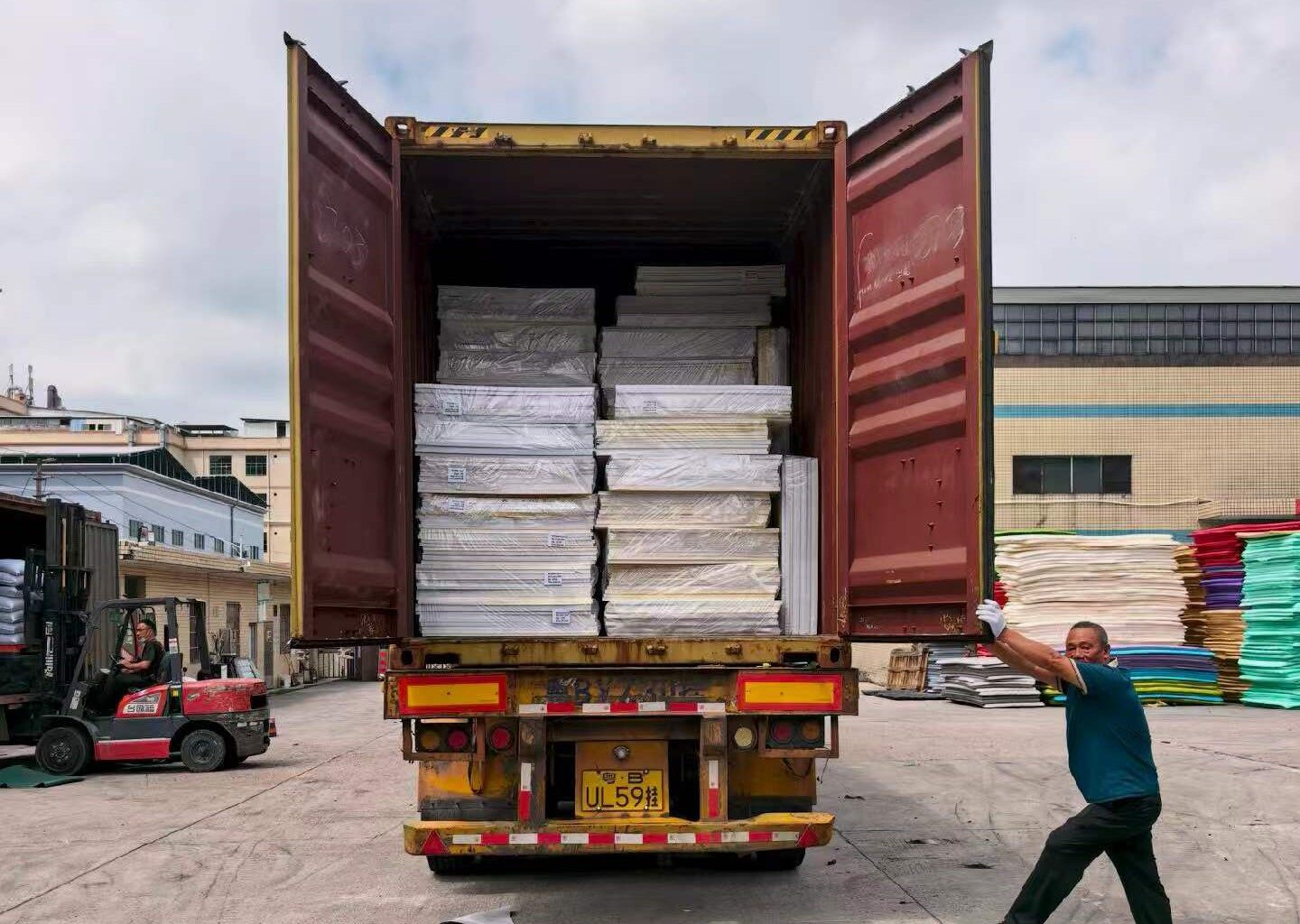
Importing EVA foam in bulk is not like buying it by the sheet. The foam itself is cheap, lightweight and easy to ship — but a single mistake in your HS code, your commercial invoice or your certificate of origin can hold a full container at the port for days, racking up demurrage and storage fees that wipe out your margin. In this guide we walk through exactly what you need to clear a container of EVA foam through US customs, using a real shipment we sent to a client in Los Angeles as a running example.
If you are new to bulk EVA buying, start with our guide on what EVA foam is and how to specify density, hardness and thickness before you worry about paperwork.
The HS code you need (and how to get it right)
EVA foam sheet and roll falls under HS heading 3921 — “other plates, sheets, film, foil and strip, of plastics.” The specific subheading for closed-cell EVA foam is:
| Side | Code | Description |
|---|---|---|
| China export (10-digit HS) | 3921.19.90.90 | Other plates/sheets/film of cellular plastics |
| US import (8-digit HTS) | 3921.19.90 | Other plates/sheets/film of cellular plastics |
That is the code we used for the white EVA sheets in the Los Angeles shipment. Three things to watch, because this is where most first-time importers trip up:
- Do not classify EVA as “foam” generically. “Other foam plastic board” maps to 3921.19, but writing just “foam” or “EVA pad” on the invoice invites a customs hold. The description must say what it actually is — “ethylene-vinyl acetate (EVA) foam sheets, density 86 kg/m³, thickness 20 mm.”
- Cut, die-cut or converted EVA is a different code. Raw sheet and roll is 3921.19.90. Once it is cut into shaped parts (a shoe insole, a phone-case liner, a toolbox insert), it is no longer “plate/sheet” and may classify differently — often under the finished-article heading of the product it becomes. Classify the form you actually ship, not the raw material.
- Adhesive-backed EVA is not always the same line. If the foam has a self-adhesive layer, confirm with your broker whether it stays in 3921.19 or shifts to a self-adhesive plastics line. The Los Angeles sheets were plain (the adhesive was added downstream by the buyer), so 3921.19.90 was correct.
Getting the HS code right up front is the cheapest insurance in international shipping — a misclassification can mean paying the wrong duty, then owing the difference (plus penalties) in a post-clearance audit. For the US, the authority is the Harmonized Tariff Schedule of the United States.
What determines your landed cost: duty, not just freight
Two numbers decide whether a container of EVA foam is profitable: freight (which we covered in our bulk shipping guide) and duty. EVA foam is light, so freight is usually charged on volumetric weight rather than gross weight — but duty is a straight percentage of the declared customs value.
Duty on HTS 3921.19.90 sits in the low single digits as a base (MFN) rate, but the final effective rate for Chinese-origin goods can be much higher once additional Section 301 tariffs are stacked on top. Because US tariff rules on Chinese plastics have changed several times in 2025–2026, we deliberately do not print a single duty number here — it would be out of date before you read it. Instead, two rules that stay true:
- Always ask your customs broker for a binding rate quote before you commit to an order. The rate that applies on your shipment’s arrival date is the one that counts, and your broker can pull the current figure from CBP in minutes.
- Budget a buffer. If your landed-cost model assumes 5% duty and the real number is 12%, that gap comes straight out of margin. Build the tariff into the quote before you sell, not after.
Our recommendation for any buyer importing $5,000+ of EVA foam: get a written landed-cost estimate from a licensed customs broker that itemises duty, the merchandise-processing fee (MPF), and any harbour-maintenance fee (HMF), on top of the ocean freight figure.
The five documents you must have before the container arrives
US customs will not release your container without a complete, consistent paperwork set. These five are non-negotiable, and every figure on them has to match across all documents:
| Document | What it proves | What goes wrong if it is off |
|---|---|---|
| Commercial invoice | Value, buyer/seller, terms, HS code, full product description | Undervaluing or vague descriptions trigger holds and penalties |
| Packing list | Gross/net weight, dimensions, piece count per pallet/carton | Mismatched weights = physical inspection + storage fees |
| Bill of lading (B/L) | Contract of carriage + title to the goods | Wrong consignee = goods stuck at the port |
| Certificate of origin | Where the goods were made (determines duty rate) | Missing COO = paying full MFN rate instead of any preference |
| Packing declaration / ISF | US importer security filing (must be filed before vessel sails) | Late ISF = fines and clearance delay |
Two extra documents matter for EVA specifically, even though they are not “clearance” papers in the strict sense:
- Material compliance documents — your REACH / RoHS declarations and, if the foam touches food or skin, any relevant FDA or California Prop 65 statements. Amazon US sellers have been required since 2024 to upload a Material Compliance Certificate for EVA products. Have these ready before your customer asks.
- Certificate of analysis (COA) — if you are shipping to a buyer with a written density or hardness spec, send a COA for the batch. It prevents “the foam is too soft” disputes before they start.
For a plain, uncut, unprinted sheet of EVA foam there is no special import permit or licence — it is not a regulated commodity like food, pharma or electronics. The friction is paperwork accuracy, not permits.
The Los Angeles example, end to end
To make this concrete, here is the paperwork chain for a real shipment we ran — a 40HQ container of white EVA foam sheets, 1 m × 1 m × 20 mm, 2,800 pieces, 4,650 kg, sent from Shenzhen to the port of Los Angeles:
- HS/HTS code: 3921.19.90 (cellular plastics plate/sheet)
- Description on invoice: “Ethylene-vinyl acetate (EVA) foam sheets, white, 1 m × 1 m × 20 mm, density 86 kg/m³, non-adhesive, 2,800 pcs”
- Terms: FOB Shenzhen (buyer arranged freight and import clearance through a US broker)
- Documents issued: commercial invoice, packing list, house + master B/L, certificate of origin (China)
- US-side filing: ISF filed by the buyer’s broker before the vessel sailed
Because the description was complete and every weight matched across the invoice, packing list and B/L, the container cleared without a physical examination — the single biggest cost-avoidance win in the whole process. A vague description like “EVA foam” or “foam boards” is the most common trigger for a CBP exam.
Seven rules to clear your EVA container without drama
- Fix the HS/HTS code before you quote, not after the order.
- Write a complete product description — material, density, thickness, dimensions, adhesive or not. Never just “EVA foam.”
- Make every weight and piece count match across invoice, packing list and B/L.
- File the ISF early — it must be in before the vessel departs.
- Get a written duty quote from a licensed broker so there are no tariff surprises.
- Have REACH/RoHS + COA ready to hand over, even if customs does not ask.
- Use a certificate of origin every time — it is cheap and can cut the rate.
Frequently Asked Questions
What HS code should I use for EVA foam sheets?
HS heading 3921.19 — “other plates, sheets, film, foil and strip, of plastics.” China’s 10-digit export code is 3921.19.90.90; the US 8-digit import HTS is 3921.19.90. Confirm the exact national extension with your broker, and only if the foam is shipped as raw sheet or roll — cut or converted parts classify differently.
Do I need an import licence to bring EVA foam into the US?
No. Plain, uncut, unprinted EVA foam sheet is not a regulated commodity, so there is no special permit. What you do need is accurate documentation: commercial invoice, packing list, bill of lading, certificate of origin, and a timely ISF filing.
How much duty do I pay on EVA foam imported from China?
There is a low base MFN rate on HTS 3921.19.90, but Chinese-origin plastics have carried additional Section 301 tariffs that changed repeatedly through 2025–2026. Do not rely on any single printed number — ask your customs broker for the current binding rate at the time of your shipment.
Will my container be physically inspected?
Not if your paperwork is consistent and your description is complete. Vague descriptions (“foam,” “EVA pad”) and mismatched weights are the two most common triggers for a CBP exam, which adds days and storage fees.
What compliance documents should I have for EVA foam?
REACH and RoHS declarations, a certificate of analysis (COA) if there is a density or hardness spec, and — for food-contact or children’s use — the relevant FDA or Prop 65 statements. Amazon US sellers need a Material Compliance Certificate uploaded in Seller Central.