 AOWEIDA
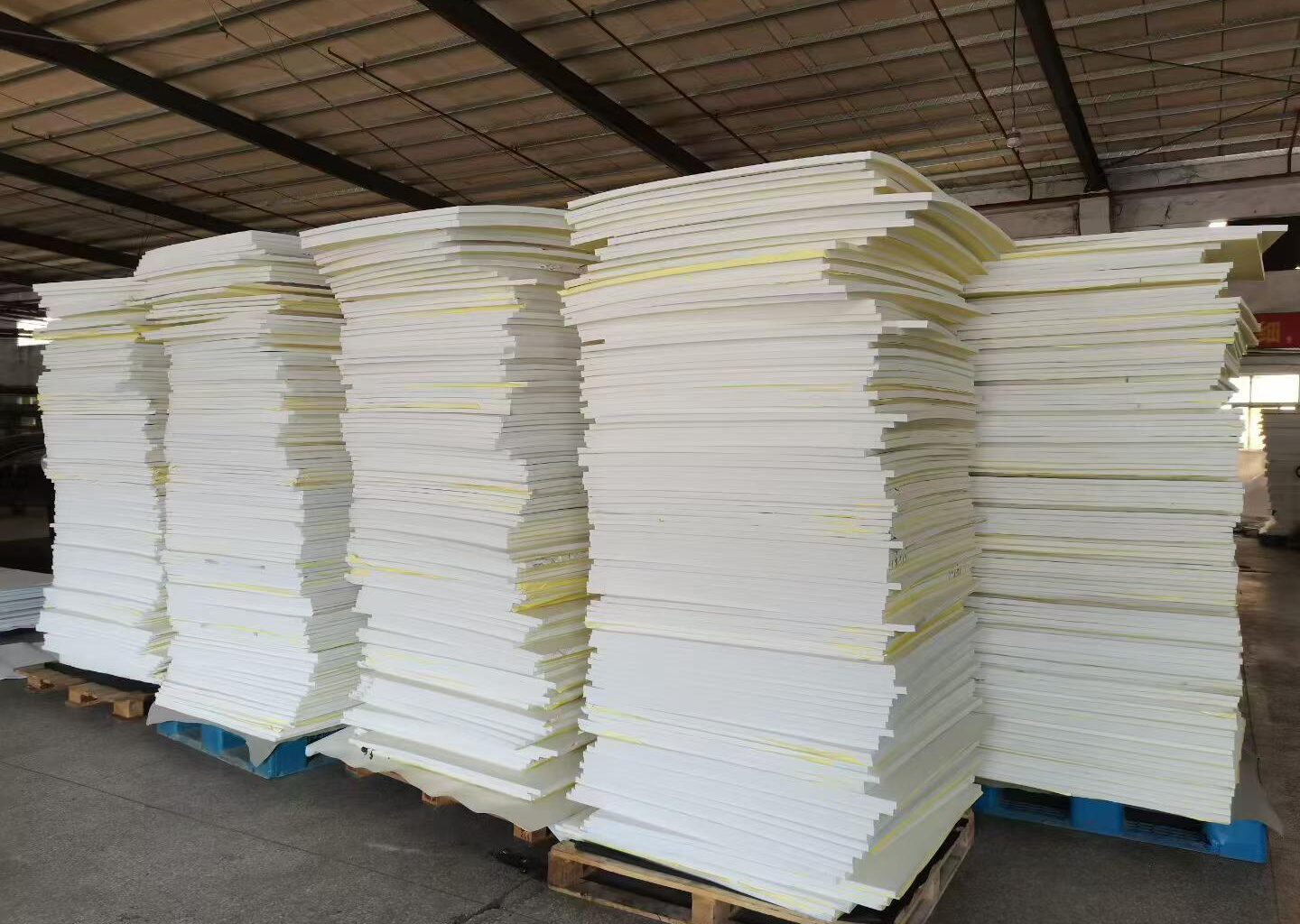
Ordering EVA foam sheet by the sheet is simple. Ordering a full container is a different game — one where freight, volume, weight and documentation decide whether the landed cost still makes sense. This guide walks through the numbers that matter, using a real shipment from AOWEIDA as the worked example.
If you are still deciding on the material itself, start with our guide on what is EVA foam before you size a container.
A real 40HQ shipment, broken down
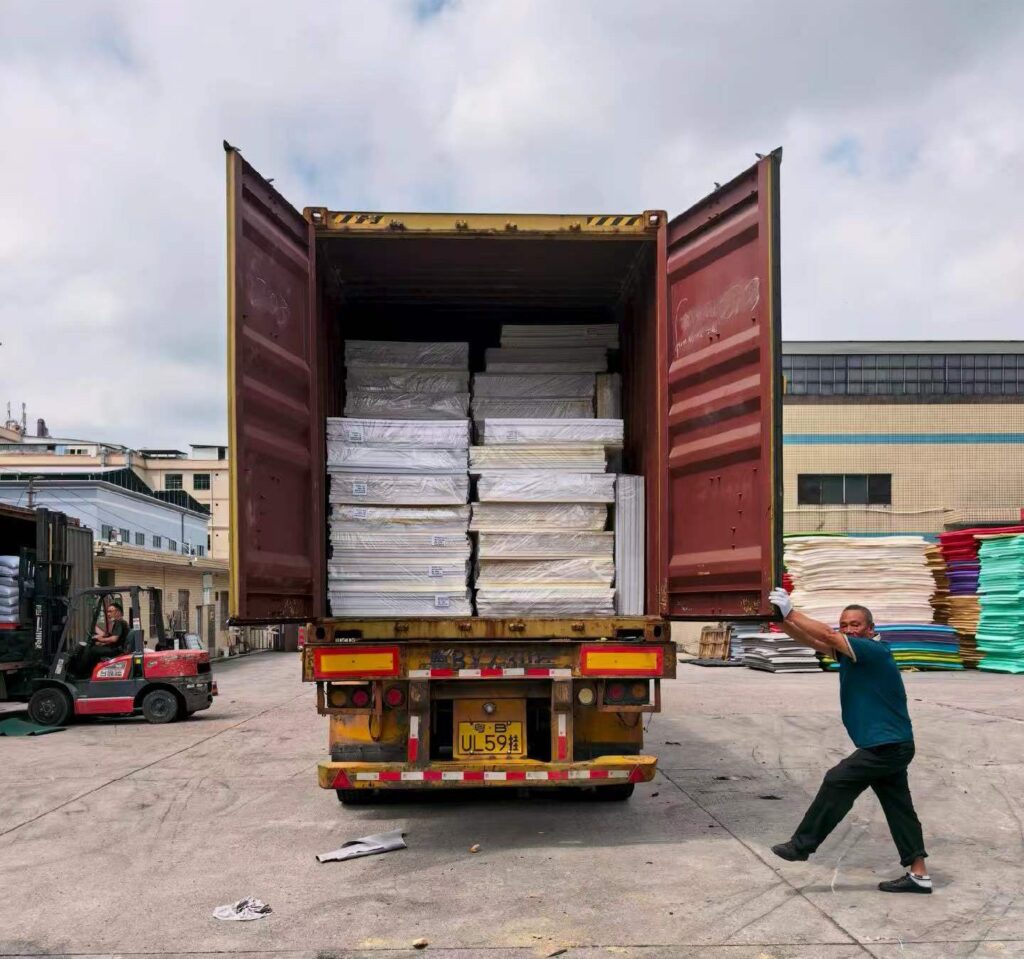
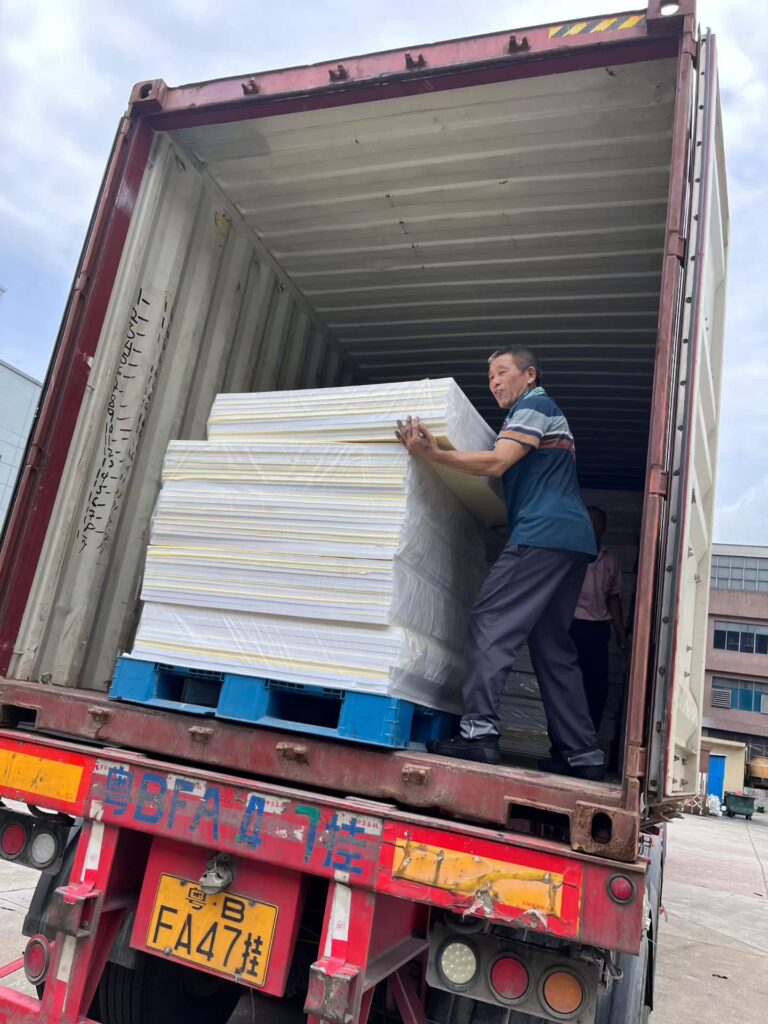
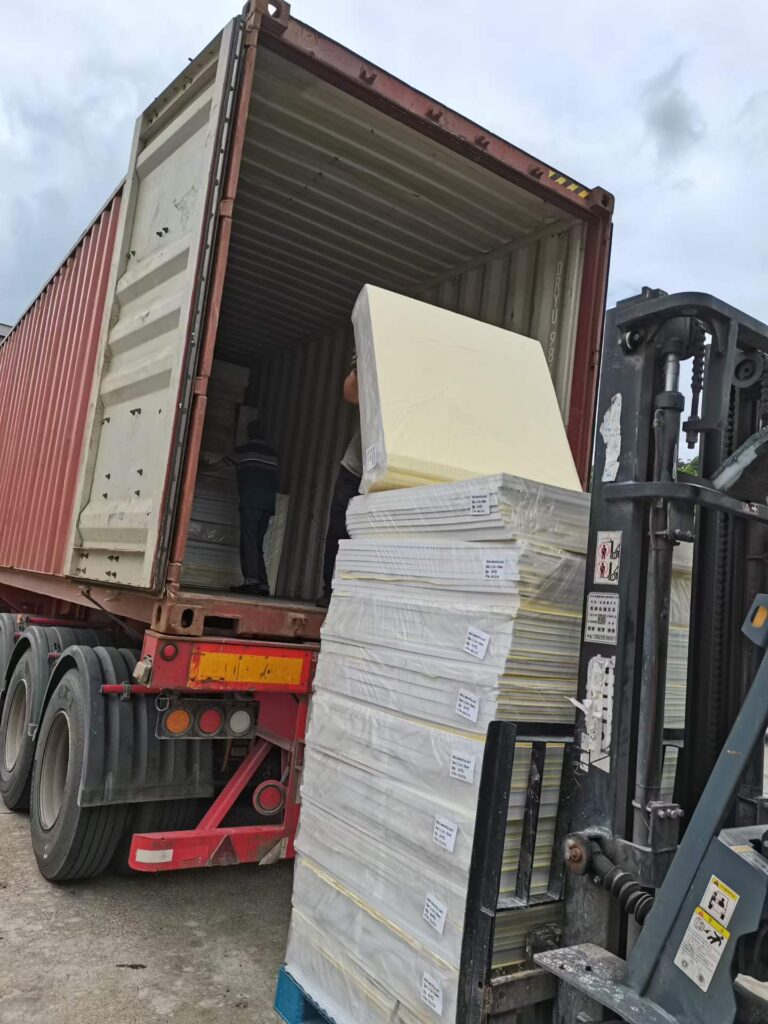
To make the maths concrete, here is an actual full-container order we shipped from Shenzhen to a US client at the port of Los Angeles:
| Specification | Value |
|---|---|
| Container | 40′ High Cube (40HQ) |
| Product | White EVA sheet, adhesive-backed |
| Sheet size | 1,000 mm × 1,000 mm × 20 mm |
| Quantity | 2,800 sheets |
| Volume occupied | 68.2 m³ |
| Gross weight | 4,650 kg |
Two things stand out in that table. First, the weight is light — 4,650 kg is far below a 40HQ’s ~26-tonne payload limit, which means freight is priced on volume, not weight. Second, the density works out to about 83 kg/m³, right in the sweet spot for a durable 20 mm sheet that holds its shape. If you want to specify your own numbers, our guide on how to specify EVA foam density, hardness and thickness covers it.
How much EVA foam fits in a container?
This is the question every importer asks first, and the answer depends on the form factor:
| Form | How it packs | Typical load |
|---|---|---|
| Sheets (flat stack) | Nested flat on pallets or slip sheets | 50–70 m³ per 40HQ |
| Rolls | Standing on end, tight-packed | High fill ratio, up to ~70 m³ |
| Die-cut / moulded parts | Boxed or tray-packed | Lower — boxed air gaps add volume |
Flat sheet is the most efficient format: our example loaded 68.2 m³ into a 40HQ. Rolls are nearly as efficient. Die-cut or boxed parts pack lower because the packaging adds void space, so factor that in when you compare quotes.
Volume vs weight: which one drives your freight?
EVA foam is light, so your freight is almost always charged on volumetric weight, not gross weight. The rule of thumb carriers use is roughly 1 m³ ≈ 167 kg chargeable weight.
Applied to the example above: 68.2 m³ × 167 = 11,389 kg chargeable weight — more than double the actual 4,650 kg. That gap is exactly why two suppliers quoting the same container price can still deliver very different landed costs: the one who packs tighter (fewer m³) costs less to ship.
This is also why EVA compares well to rubber: rubber’s higher density means you pay for weight you do not need, which our comparison of EVA vs PVC vs rubber breaks down.
Incoterms and what they mean for your cost
Pick the term before you negotiate, because it decides where your responsibility (and risk) starts and ends:
- FOB — you arrange and pay ocean freight and insurance; the supplier’s cost stops at the port of loading.
- CIF — the supplier pays freight and insurance to the destination port; you handle customs clearance and onward delivery.
- DDP — the supplier delivers to your door, duties paid; simplest for you, highest quote.
Most first-time importers start on CIF for simplicity, then move to FOB once they have a freight forwarder they trust. Whichever you choose, get the HS code confirmed up front. White EVA foam sheet of this type is typically cleared under HS 3921.19.90 (other plates, sheets and film of plastics, cellular), which determines your duty rate at the destination port — for a US shipment, that means the port of Los Angeles in our worked example.
What to prepare before you order a container
- Exact specs — density, hardness, thickness, sheet size, colour and adhesive type.
- Target annual volume — one container now, or a recurring programme? It changes your pricing and tooling.
- Compliance documents — REACH, RoHS or SGS reports for your market. Our compliance checklist tells you what to ask for.
- Incoterm + port — FOB/CIF/DDP and the origin and destination ports.
- A sample first — always approve a physical sample before committing a full container; a wrong sample at container scale is an expensive lesson.
Lead time: from order to delivery
A typical full-container EVA order runs on roughly this timeline:
- Sampling — 5–10 days.
- Production — 7–25 days depending on volume and whether tooling is involved.
- Ocean transit — 15–25 days to the US West Coast, longer to the East Coast.
- Customs & delivery — 3–7 days if your paperwork is complete.
Plan on 6–9 weeks door-to-door for a first order, and budget more if Chinese New Year or peak season falls in your window. For the production side in detail, see our walkthrough of OEM custom EVA from sample to mass production.
Importing EVA foam: frequently asked questions
How much EVA foam fits in a 40ft container?
Flat sheet packs roughly 50–70 m³ in a 40HQ depending on format. Our example loaded 68.2 m³ of 20 mm sheet — 2,800 pieces at 1 m × 1 m.
Is EVA foam charged by weight or volume for shipping?
Volume. EVA is light, so carriers bill volumetric weight (about 1 m³ = 167 kg), which is why tight packing matters more than anything else for your freight cost.
What Incoterm should I use?
CIF is the easiest starting point for a first order; move to FOB once you have a freight forwarder you trust. DDP is simplest but carries the highest quote.
What documents do I need to import EVA foam?
Commercial invoice, packing list, bill of lading, and the compliance documents your market requires — REACH/RoHS declarations or SGS reports. Confirm the HS code up front to fix your duty rate.
Can I order a full container on my first order?
You can, but we recommend approving a physical sample first. A wrong spec at container scale is far more expensive to fix than a sample round, and sample fees are usually credited against your first order.
Get a container quote, not just a sheet price
Whether you need one 40HQ or a recurring programme, tell us your specs and volume and we will quote the material, packing and lead time together — so the landed cost is clear before you commit.