 AOWEIDA
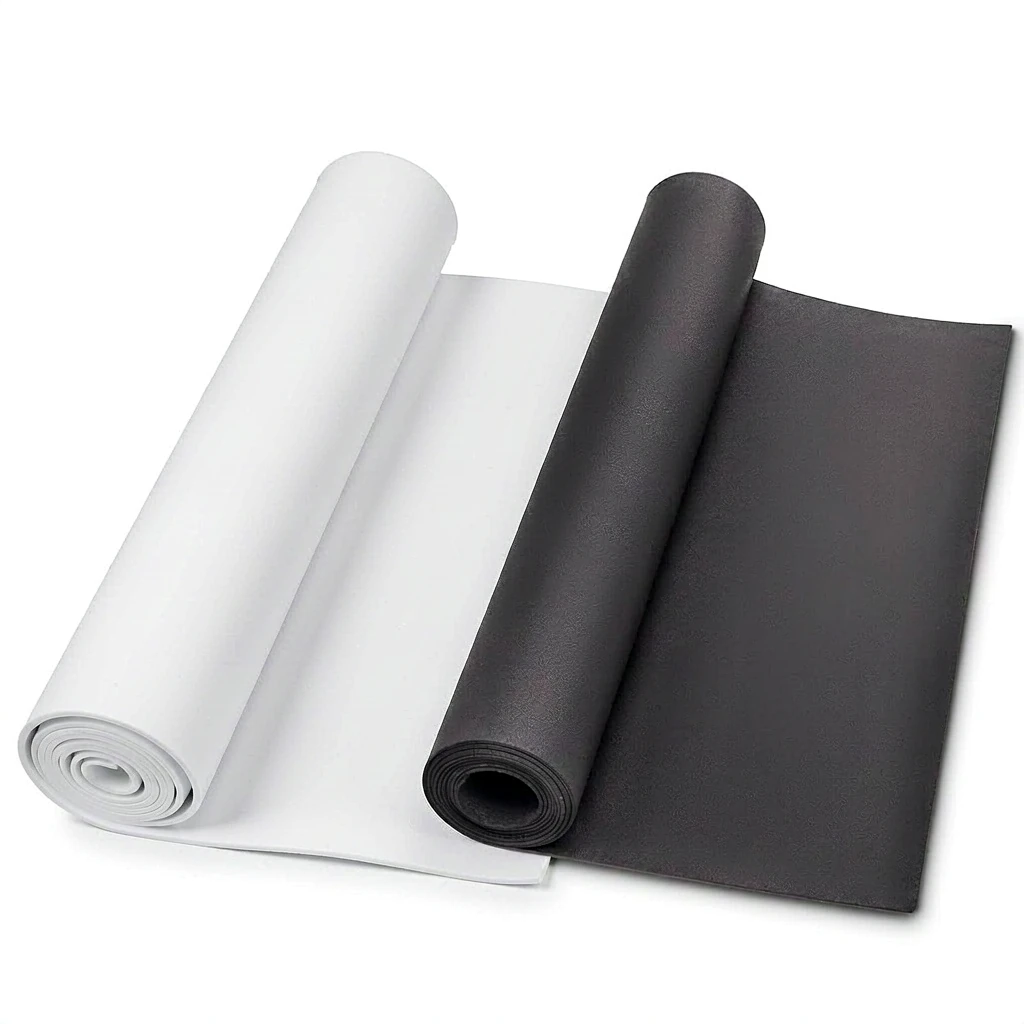
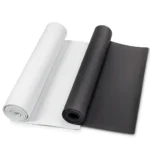


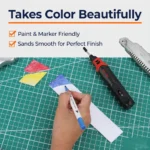
Our black and white EVA foam roll puts two contrasting colours on a single roll, so you can build the light and dark parts of the same costume, sign, or model without opening a second roll or waiting for paint to dry. One order gives you 14″ x 39″ of closed-cell EVA in both black and white, in your choice of thickness from 1 mm to 20 mm, pressed at 86 kg/m³ for a firm but comfortable feel. Both colours cut, heat-form, glue, and paint the same way — the difference is that the contrast arrives ready-made.
What Is a Two-Colour Black and White EVA Foam Roll?
A two-colour roll pairs black EVA lengths and white EVA lengths on rewound backing of the same gauge. Instead of buying one roll of black and one of white, you cut both tones from the same roll, which keeps colour costs, storage, and stock-keeping to a single item. Because the black and white pieces leave the factory at the same thickness and density, layered parts sit flush: a white trim piece cut from this roll lands level on a black armour plate cut from the same roll, without shims or filler. Builders use that pairing for armour trim, insignias, lettering, presentation boards, model facades, and packaging cavities where colour helps the eye separate layers at a glance.
Product Specifications
- Product: Black and White EVA Foam Roll (two-colour roll)
- Material: EVA foam (ethylene-vinyl acetate), closed-cell
- Colours on one roll: Black and white
- Roll size: 14″ x 39″ (35.6 cm x 99 cm)
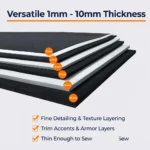
- Thickness: 1 mm to 20 mm available; stock gauges 1, 2, 3, 4, 5, 6, 8, 10 mm, custom gauges on request
- Pack quantity: 1, 2, or 3 rolls per order
- Colour matching: Black and white pieces share thickness and density so layered parts sit flush
- Finish: Smooth matte, both sides
- Density: 86 kg/m³ (high density)
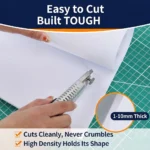
- Cutting tools: Scissors, hobby knife, die-cut / cutting plotter machines
- Recommended adhesive: Contact cement or super hobby glue
- Heat-formable: Yes (heat gun or hair dryer)
Why Builders Pick a Two-Colour Roll Instead of Two Single-Colour Rolls
1. Contrast without waiting on paint
Dark trim on a light panel, or light lettering on a dark armour plate, comes straight off the roll. You skip the two coats of acrylic normally needed to get a clean edge between tones, which also removes the risk of bleed along a taped line.
2. Matched thickness across both colours
Because both tones share the same gauge and the same 86 kg/m³ density, a white overlay stacks flush against a black base instead of standing proud. That matters most on layered signs, laminated props, and symmetrical parts that have to line up across a seam.
3. Black stays black after cutting and sanding
Painted foam reveals white hairs along a bevel the moment you sand it. Solid-colour EVA hides that: cut a bevel into black foam and the edge still reads black, so edges need no touch-up before the piece goes in front of a camera.
4. One roll to order, store, and carry
Most contrast projects need a lot of one colour and a little of the other. Sharing a roll means you are not left with most of a white roll unused in a cupboard, and there is only one line on the purchase order.
5. Same working behaviour as single-colour EVA
The white lengths take a heat gun, take a needle, and take contact cement exactly as the black lengths do. Nothing changes in your technique, which is why this roll suits builders moving up from single-colour foam for the first time.
6. Closed-cell, water-resistant, and easy to clean
Both tones resist water, spring back after bending, and wipe clean. The black hides workshop marks; the white shows them sooner, so it rewards a clean bench and clean hands during assembly.
Where Two-Colour EVA Foam Roll Works Best
- Armour plates, trim, and insignias — a white or light-colour detail layer cut from the same roll as the dark base.
- Classroom displays and lettering — dark backing boards with light letters that read from the back of the room.
- Layered signs and presentation boards — two tones give depth without extra materials.
- Model buildings, dioramas and props — facades, roofs, and panel lines in contrasting tones.
- Packaging cavities and case liners — colour-code layers so packers see which part belongs where.
- Stencils, templates, and repeat shapes — cut patterns from the light tone and parts from the dark one.
- Cosplay eye shapes, mask inlays and badges — small high-contrast parts that are painful to mask and paint.
How to Cut, Shape and Bond Two-Colour Foam
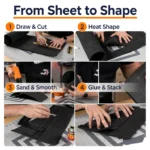
Cut both tones with the same blade settings, and use the light side for templates first so any marking lands on parts you can afford to scrap. Score the surface lightly before bending a tight curve. Heat-form each piece separately, let it cool fully, then assemble — combining while still warm lets stacked layers creep. For bonding, apply contact cement to both faces for large areas, or super hobby glue in thin coats for detail work; test glue on an offcut, since aggressive solvents can warp thin gauges. When stacking, keep the thickness identical between the dark and light layer so the seam sits flat.
Two-Colour Roll vs Buying Black and White Separately
Buying two single-colour rolls makes sense when one colour dominates the build and you will use the whole roll. For most mixed work the two-colour roll wins on three counts: there is only one item to source and stock, both tones come from the same production batch so their gauge and colour match, and you avoid paying for a full roll of white you may use 30 cm of. Separate rolls still have a place for dedicated all-black or all-white production runs, where a single gauge across a large order simplifies cutting.
Frequently Asked Questions
Are black and white on the same roll?
Yes. Each roll carries both colours, so you can cut a dark part and a light part without swapping stock mid-project.
Do both colours come in the same thickness?
Yes. When you order 3 mm, both the black and white lengths are 3 mm and share the same 86 kg/m³ density, which keeps layered assemblies flush.
Can I choose how much black versus white I get?
Standard packs are balanced between the two tones. Buyers re-ordering regularly can specify a different colour ratio as part of a wholesale or OEM order — our team quotes that on request.
Can I paint or seal the white foam?
Yes. Acrylics, markers, spray paint, and plastidip all take well on the smooth matte surface. Sand lightly and prime first if you want a show-quality finish.
Will the white foam show marks more than the black?
It will show workshop dust and fingerprints sooner. Wipe pieces with a dry cloth before assembly and keep adhesive away from visible edges.
Can I use a Cricut or cutting plotter on this foam?
Yes. Most craft cutting machines handle EVA foam from 1 mm upward with a deep-cut blade. Check your machine’s material settings first, and run a test shape on an offcut.
What sizes and pack quantities are available?
Each roll measures 14″ x 39″ and you can order 1, 2, or 3 rolls per pack, in any thickness from 1 mm to 20 mm.
Wholesale, Bulk & Custom – Factory Direct from AOWEIDA
AOWEIDA manufactures EVA foam in Dongguan, China. We supply wholesale and bulk black and white EVA foam rolls, single-colour rolls, sheets, and custom-cut components, and we adjust size, thickness, black-to-white colour ratio, roll length, and retail packaging under OEM/ODM. MOQ is 200 pieces. Our factory is ISO 9001 certified and the material meets REACH and RoHS, so you can specify with confidence whether the order is for a school programme or a national retail launch. Request a quote for custom two-colour EVA foam rolls.
Care & Storage
Store the roll flat or loosely rolled, away from direct sunlight and heat sources, at 5–30 °C. Wipe pieces with a dry cloth before assembly. The closed-cell foam is water-resistant but not intended for prolonged submersion; seal with plastidip or a spray sealant for outdoor use. If a cut length develops a curl in storage, lay it flat under a light weight overnight.